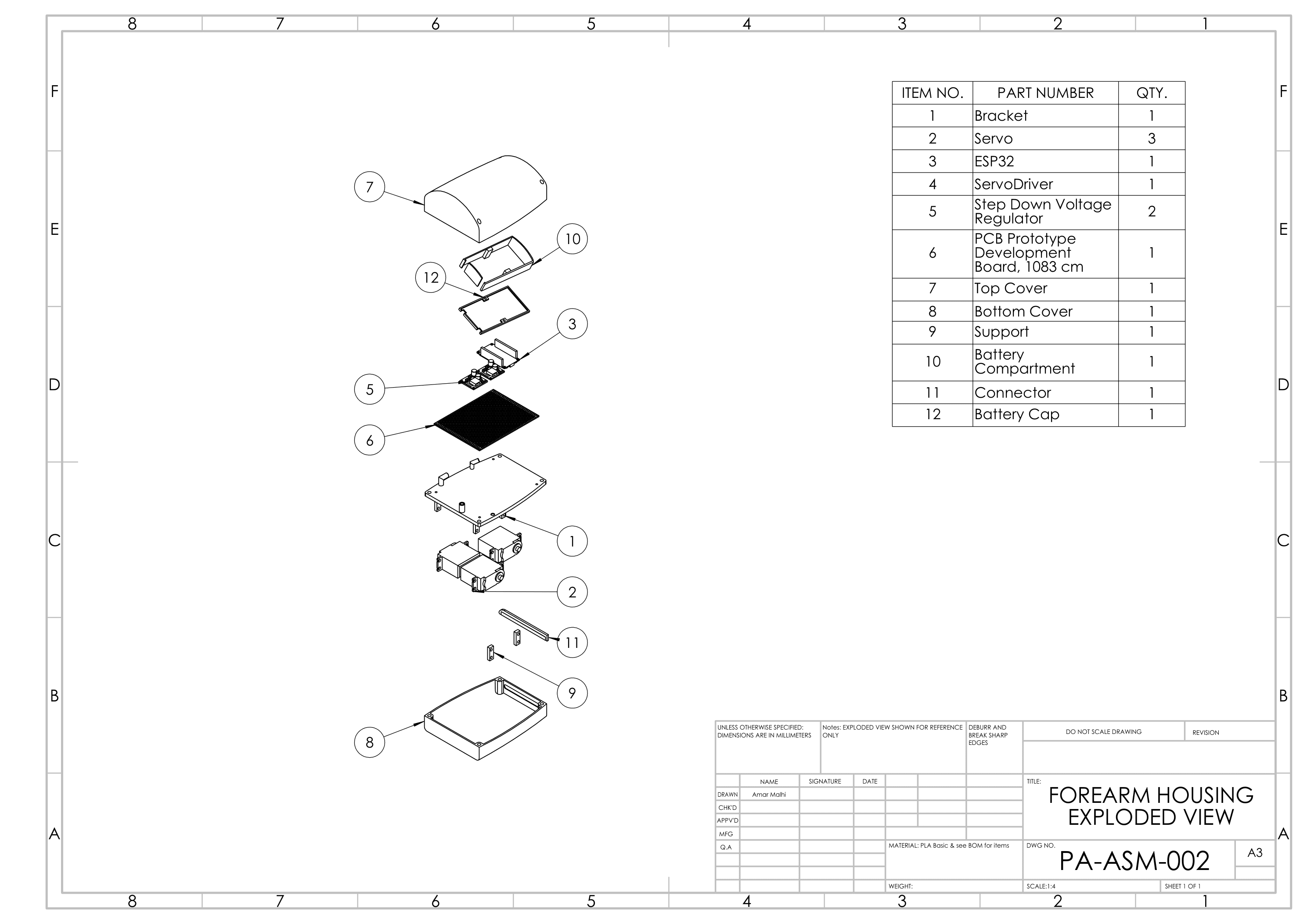
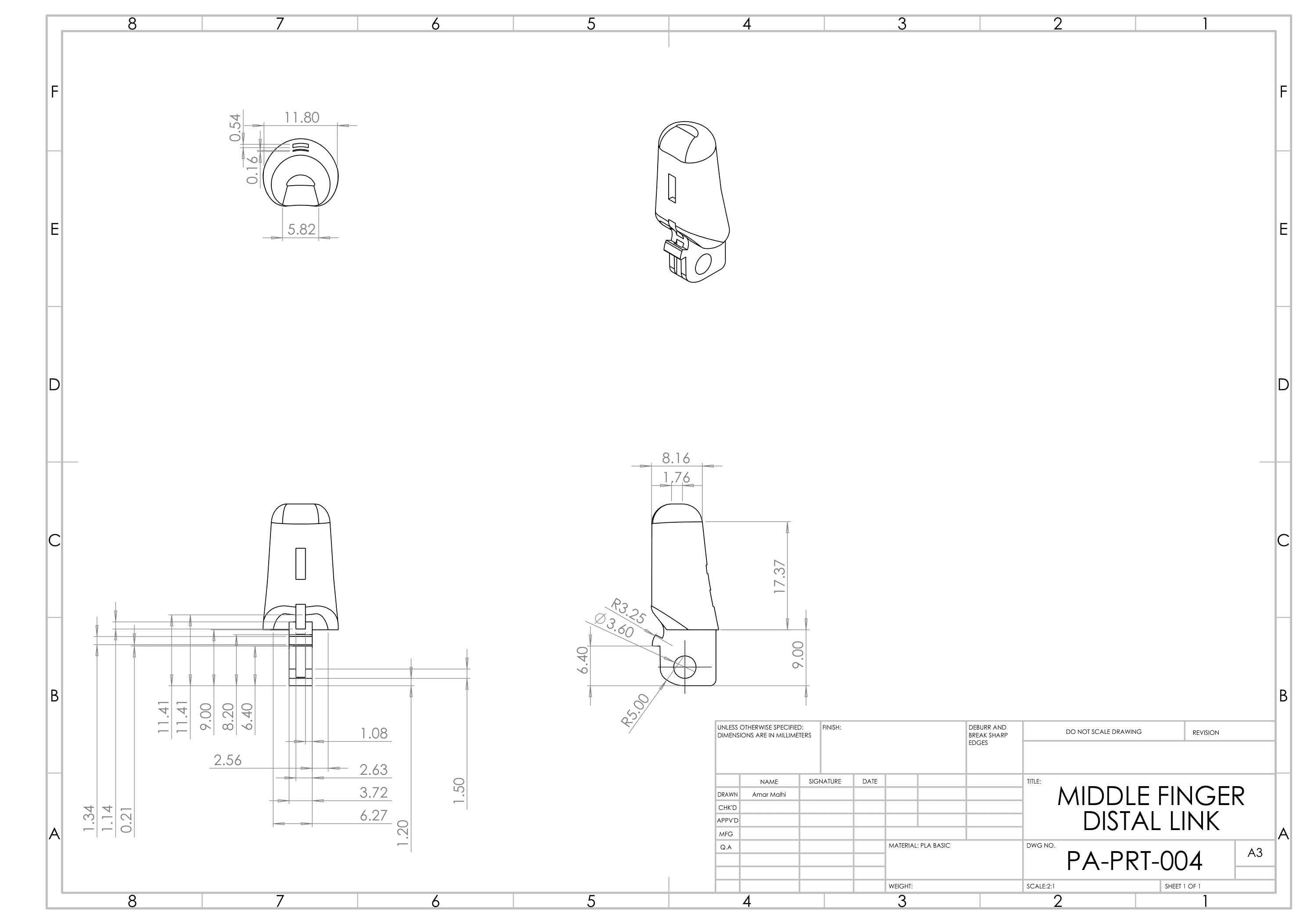
Prototype Assembly
PA-ASM-001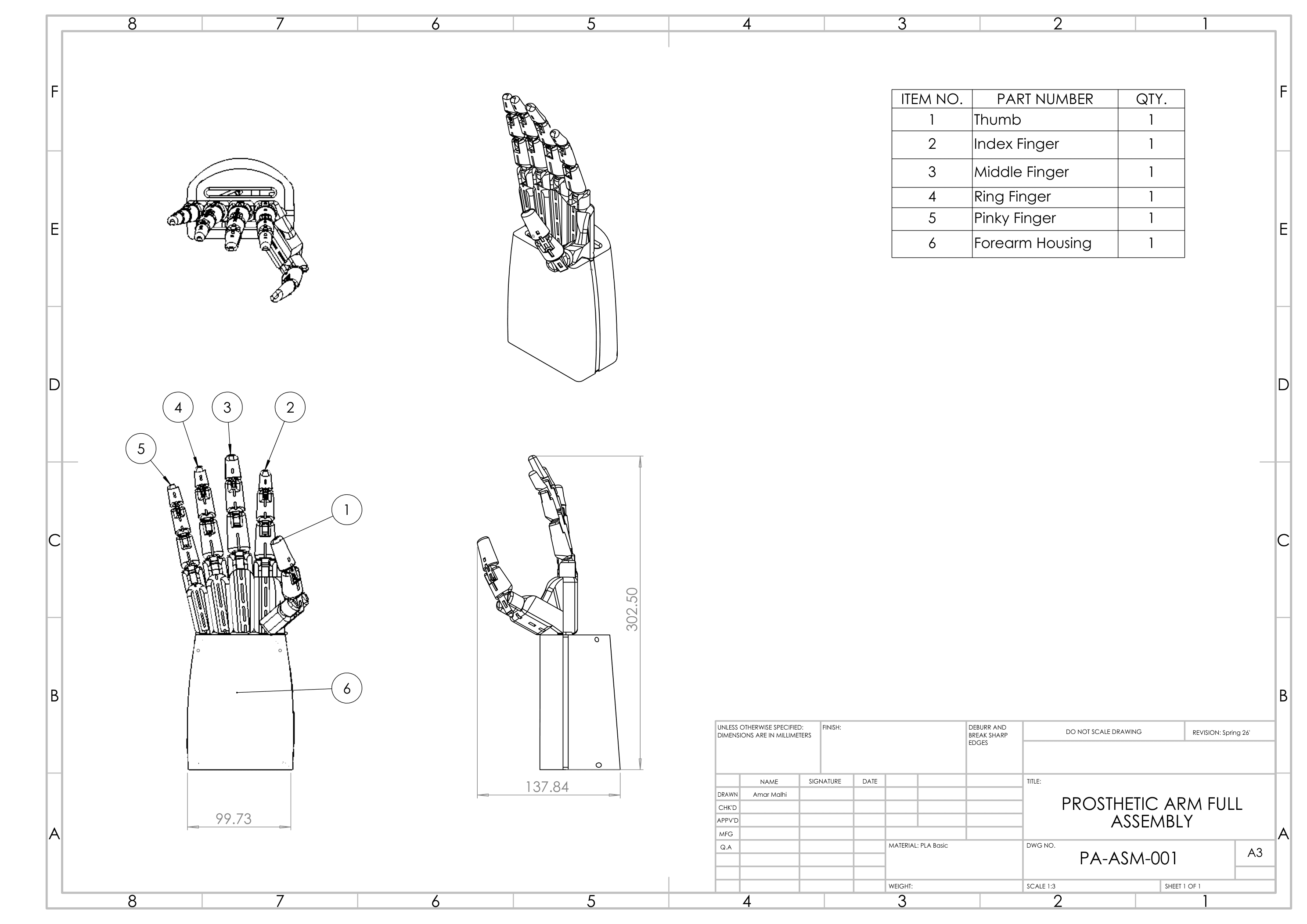
Projects
Completed first-semester research prototype (Jan–May 2026): low-cost myoelectric transradial prosthesis with sEMG/EMA control, tendon-driven 19-part hand, and SolidWorks drawing package under a sub-$500 build budget.
Jan 2026 — May 2026
| # | Objective | Design Target |
|---|---|---|
| 1 | sEMG capture (brachioradialis & flexor groups) | ≤ 100 ms total system latency |
| 2 | DSP layer — exponential moving average filter | Stabilize noisy MUAPs; reduce EMI-driven accidental triggers |
| 3 | Modular strap-based suspension | Accommodate edema and limb volume changes |
| 4 | Weight-optimized 3D-printed chassis | < 500 g assembly · 10–15 N ADL grip |
| Device Class | Cost Range | Control | Materials |
|---|---|---|---|
| High-end clinical (e.g. Össur i-Limb) | $30,000 – $100,000 | Multi-channel sEMG / TMR | Carbon fiber / titanium |
| Mid-range commercial (e.g. TASKA) | $15,000 – $30,000 | Pattern recognition | High-impact plastic / alloy |
| Open-source / hobbyist (e.g. e-NABLE) | $50 – $200 | Mechanical / passive | PLA / PETG |
| This prototype | $350 – $500 | Single-channel sEMG w/ EMA | PLA / PETG (+ industrial TPU/resin options) |
| Parameter | Value | Notes |
|---|---|---|
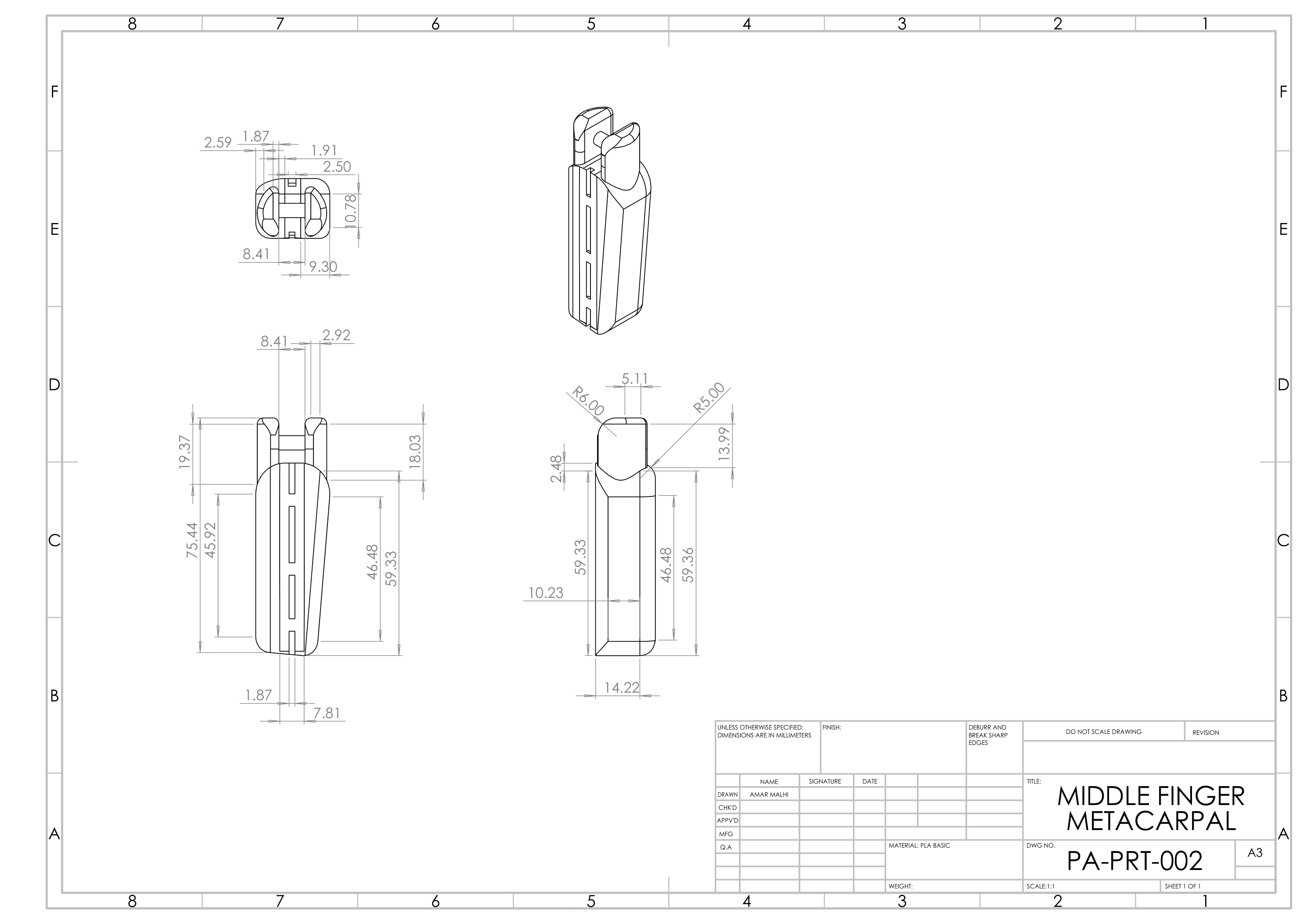
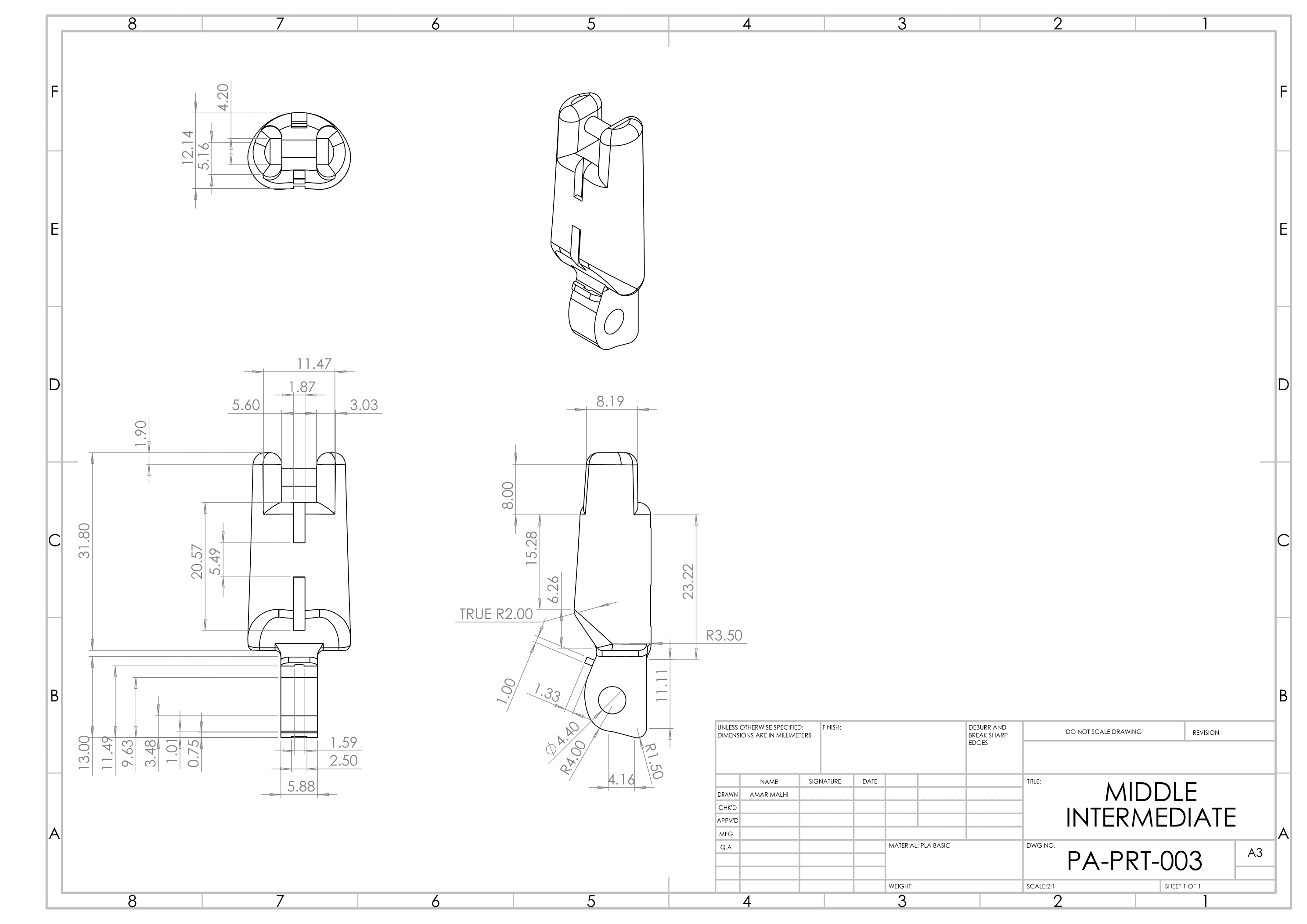
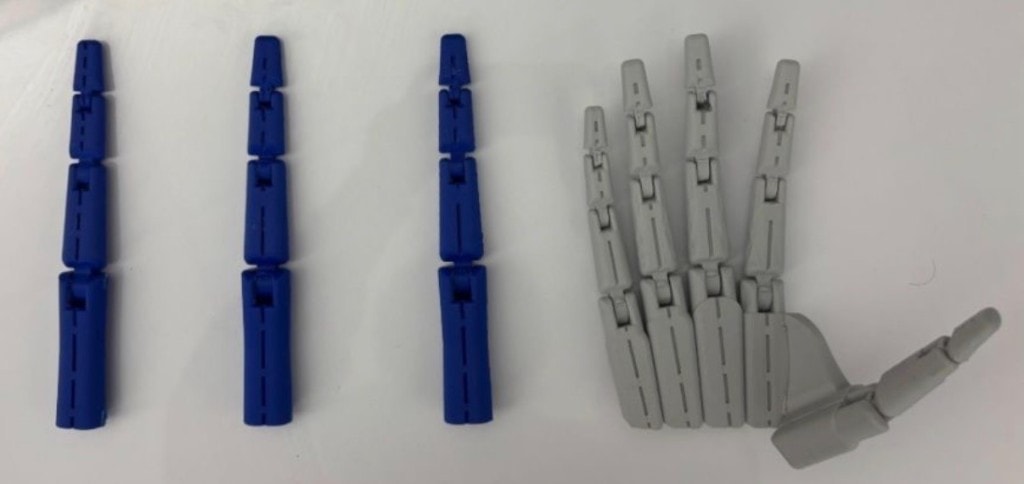
| Hand assembly | 19 parts | Hinge joints (PIP/DIP analog); no MCP rotation |
| Grip force requirement | 10–15 N | Normal ADL loads |
| Experimental grip force | ~1.2 kgf (~12 N) | Hanging-scale validation |
| Required servo torque | ≥ 2.52 kg·cm | 3-joint tendon path + friction margin |
| Servo rating | 12 kg·cm | Hosyond MG996R × 3 |
| Joint print clearance | 0.3 – 0.5 mm | Smooth rotation without post-print sanding |
| Prototype material | PLA | Iterative fit checks |
| Functional material | PETG | Higher durability under operational stress |
| Sizing basis | 95th percentile | Adjustable base for smaller users |
| Component | Specification | Role |
|---|---|---|
| MyoWare 2.0 | sEMG sensors | Brachioradialis & flexor muscle groups |
| ESP32 | Microcontroller | Analog input, servo control, signal processing |
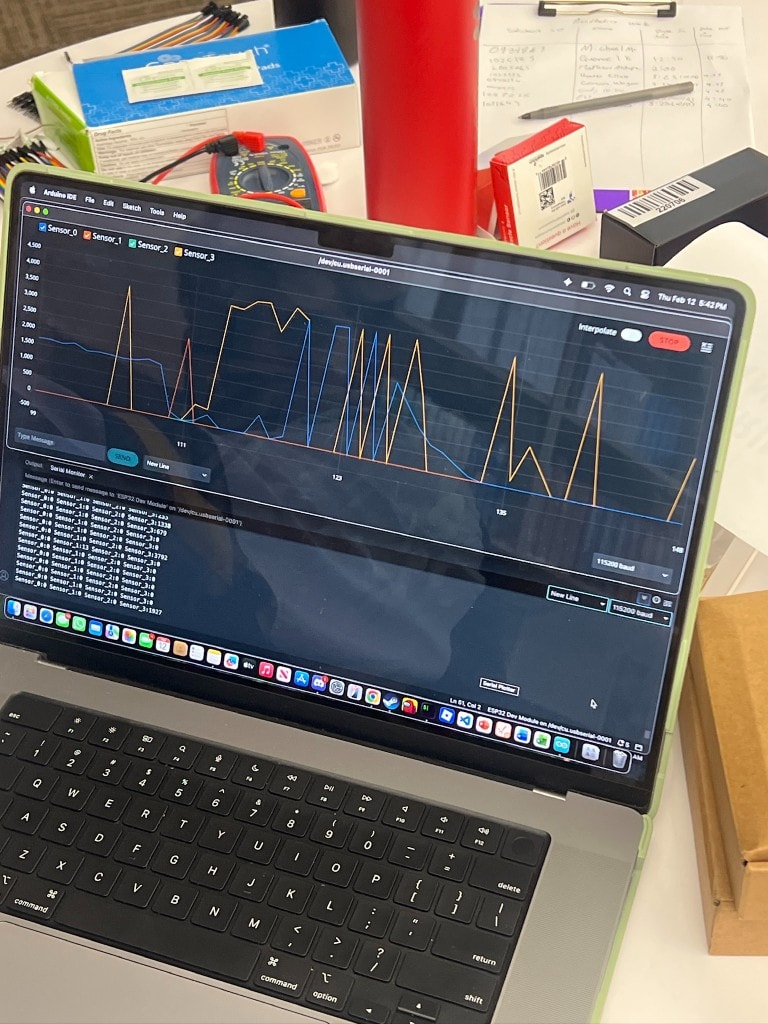
| EMA algorithm | Smoothing α = 0.1 | Stabilize raw voltage; threshold-based actuation |
| System latency | ≤ 100 ms | Neurological integration design target |
| PCB | Custom board | Sensor input, motor drive, power distribution |
| Battery | Top-mounted compartment | Weight distribution; ESP32 clearance |
Fail-safe principle: localized fuse protection per subcircuit; passive vented cooling for ESP32 and battery pack. EMA/threshold logic was designed to reduce EMI-driven false triggers; quantified before/after rates were not published in the paper.
| Subteam | Primary Contribution | Mechanical Interface |
|---|---|---|
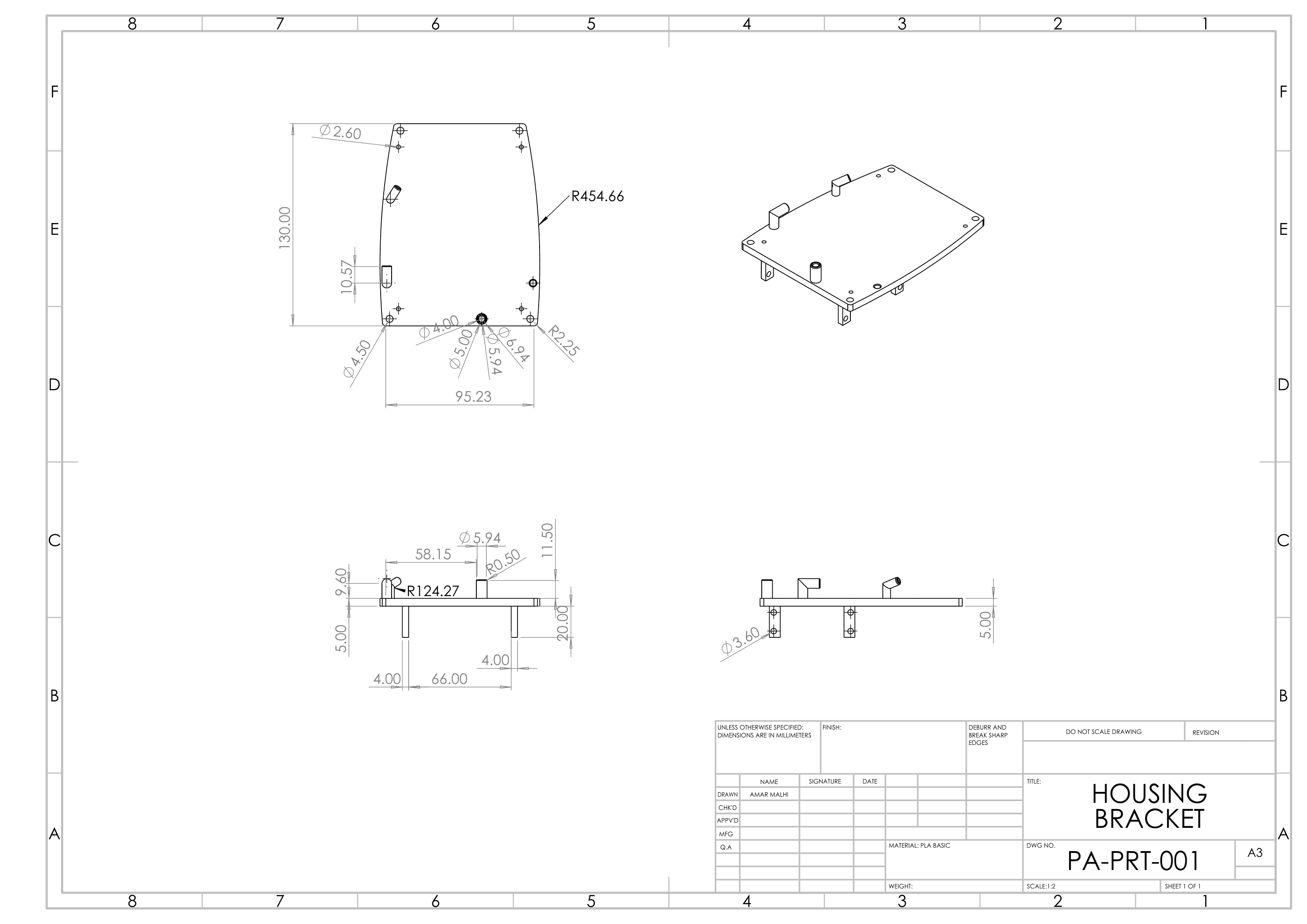
| Mechanical | Hand, housing, attachment, SolidWorks package | Tendon routing, servo clearance, structural plate |
| Electrical | PCB, wiring, power distribution | Drives housing geometry and component layout |
| Software | EMA filtering, threshold logic | Constrains sensor placement and sampling |
| Physiological | MyoWare activation thresholds | Defines muscle group targeting |
| Ergonomics | 95th-percentile sizing, strap system | Housing dimensions and attachment geometry |
| Safety | Fusing, materials review, load limits | Reviews insulation, thermal, and structural revisions |
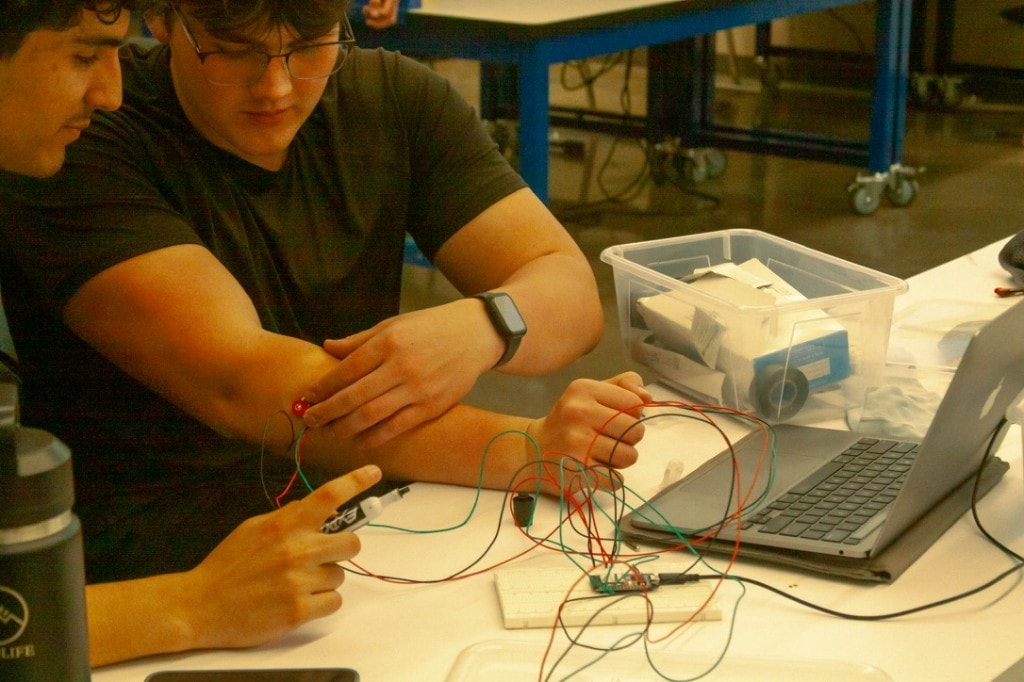
Build Photos · 4 frames

Drawing Package · 6 sheets